
What Is Sheng? A Beginner's Guide To Nairobi Street Slang

Author
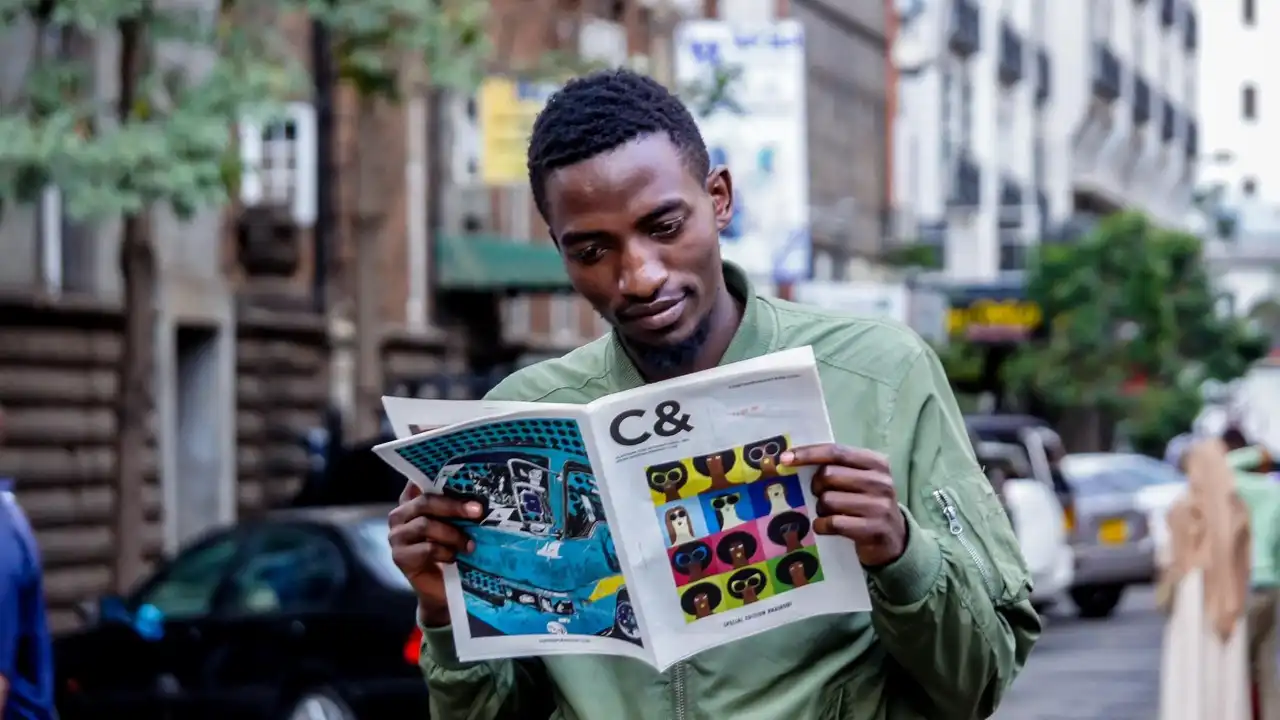
If you take a walk through the bustling streets of Nairobi, hop on a Matatu (public minibus), or listen to the latest Kenyan music, you might notice that people talk differently to the textbooks you used.
You say “Hujambo,” and someone replies with “Niaje?”
You hear words mixed with English, Swahili, and other local languages that you can’t find in the dictionary.
Welcome to the world of Sheng.
Sheng’s the urban slang of Kenya. It’s fast, creative, and constantly changing.
If you want to sound less like a tourist and more like a local “Nairo-barian,” understanding the basics of Sheng is essential.
In this guide, I’ll break down what Sheng is, where it comes from, and teach you the most common phrases you’ll hear on the streets of Nairobi.
Table of Contents:
What exactly is Sheng?
The word “Sheng” is actually a combination of Swahili and English.
It originated in the 1950s and 60s in the Eastlands area of Nairobi. It started as a code language used by the youth to communicate without their parents understanding.
Over time, it evolved from a secret code into the primary way young people in Kenya speak to one another.
Think of it like slang in English, but much more intense. It borrows words from Swahili, English, Kikuyu, Luo, and Kamba. It twists them, shortens them, or gives them completely new meanings.
Why should you learn it?
If you are learning Standard Swahili (Kiswahili Sanifu), that is fantastic. You need it for formal situations, news, and talking to elders.
But if you want to make friends in Nairobi, joke around, or understand Kenyan pop culture (like Gengetone music), you need a little bit of Sheng.
Common Sheng greetings
The first place you will encounter Sheng is in greetings.
In formal Swahili, we say Habari or Hujambo. In Sheng, we keep it short and cool.
Here are the most popular ways to say “Hi” in Sheng:
Sasa / Mambo
These are the most common. Sasa literally means “now,” but as a greeting, it means “What’s up?” or “How are things now?”
Mambo literally means “issues” or “things,” but acts as “How are things?”

Sasa?
Fiti.
Mambo?
Poa.
Niaje / Rada
If you want to sound even more like a street-smart local, you can use Niaje. This roughly translates to “How is it?”
Rada is another interesting one. It comes from the English word “Radar.” It’s like asking, “What is on the radar?” or “What’s the news?”
Niaje?
Rada?
Hakuna rada. / Rada ni safi.
Everyday Sheng vocabulary
Sheng vocabulary changes very fast. A word that was cool last year might be “old school” today.
However, there are some classic words that have stuck around for years. These are words referring to people, transport, and lifestyle.
Here is a table of common words you will hear in Nairobi:
| Sheng Word | Standard Swahili | English Meaning |
|---|---|---|
| Msee | Mtu / Mwanaume | Guy / Person / Dude |
| Dem / Manzi | Msichana | Girl / Girlfriend |
| Mathree / Nganya | Matatu | Minibus (Public transport) |
| Dunda | Kucheza dansi / Sherehe | To party / A party |
| Digi / Ocha | Mashambani | Rural home / Countryside |
| Mbogi | Kikundi | Crew / Squad / Group of friends |
| Kuwahi | Kunywa pombe / Kupata | To drink alcohol / To catch (a bus) |
| Buda / Bazenga | Baba / Mkubwa | Father / Big boss / Bro |
Here is how you might hear these words used in a sentence:
Huyo msee ako na gari fiti sana.
Mbogi yangu inaenda dunda leo.
Money slang in Nairobi
One of the most useful things to learn is how to talk about money. If you go to the market or pay for a bus fare, people often use Sheng numbers.
This can be confusing because they don’t look like standard Swahili numbers at all.
- Bob – This is the general word for Kenyan Shillings. (e.g., “I have 100 bob”).
- Chwani – 50 Shillings.
- Soo – 100 Shillings.
- Bao – 20 Shillings.
- Thao / K / Mita – 1,000 Shillings.
- Punch – 500 Shillings.
Fare ya town ni ngapi?
Ni chwani.
Nikopeshe soo.
When (and when not) to use Sheng
As a language learner, context is everything.
Sheng is very informal. It signifies that you are relaxed, cool, and part of the group.
When to use Sheng:
- Talking to friends your age or younger.
- Interacting with Matatu (bus) conductors and drivers.
- In casual markets or street shops.
- Social media texting.
When NOT to use Sheng:
- Talking to elders: In African culture, respect for elders is paramount. Using slang with an elder can be seen as rude or uneducated. Stick to standard Shikamoo or polite Habari.
- Formal business meetings: Unless you know your colleagues very well.
- In Tanzania: This is a big tip! Sheng is Kenyan. In Tanzania, they have their own street slang (often called Lugha ya Mitaani), but it is different. If you speak Nairobi Sheng in Dar es Salaam, people might look at you confused!
Keep learning and listening
The best way to learn Sheng is to listen. Kenyan music (search for artists like Sauti Sol, Khaligraph Jones, or Mejja) is a goldmine for new vocabulary.
Don’t be afraid to make mistakes. Kenyans are generally very friendly and will be excited that you are trying to speak their “street language.”
Using just a simple “Sasa?” instead of “Jambo” can instantly break the ice and earn you a smile.
Do you know any other Sheng words I missed?
Let me know!